

We’ve been busy building again.
Following the recent release of MCP connectivity and our public API, we’ve been working on the next major development for Surfacd, expanding the platform beyond measuring AI visibility to provide users with a much deeper understanding of how their brand is actually represented.
Today, we’re pleased to launch Reputation Intelligence.
It is one of our most significant additions to Surfacd so far, going beyond visibility and bringing sentiment, narratives, themes, factual accuracy, and the evidence behind them into a single dedicated view for our users.
It’s no secret that knowing where you appear on LLMs is vitally important, but increasingly, teams also need to understand what is being said when they do, and that’s why we’re bringing Reputation Intelligence to the platform.
From visibility to reputation
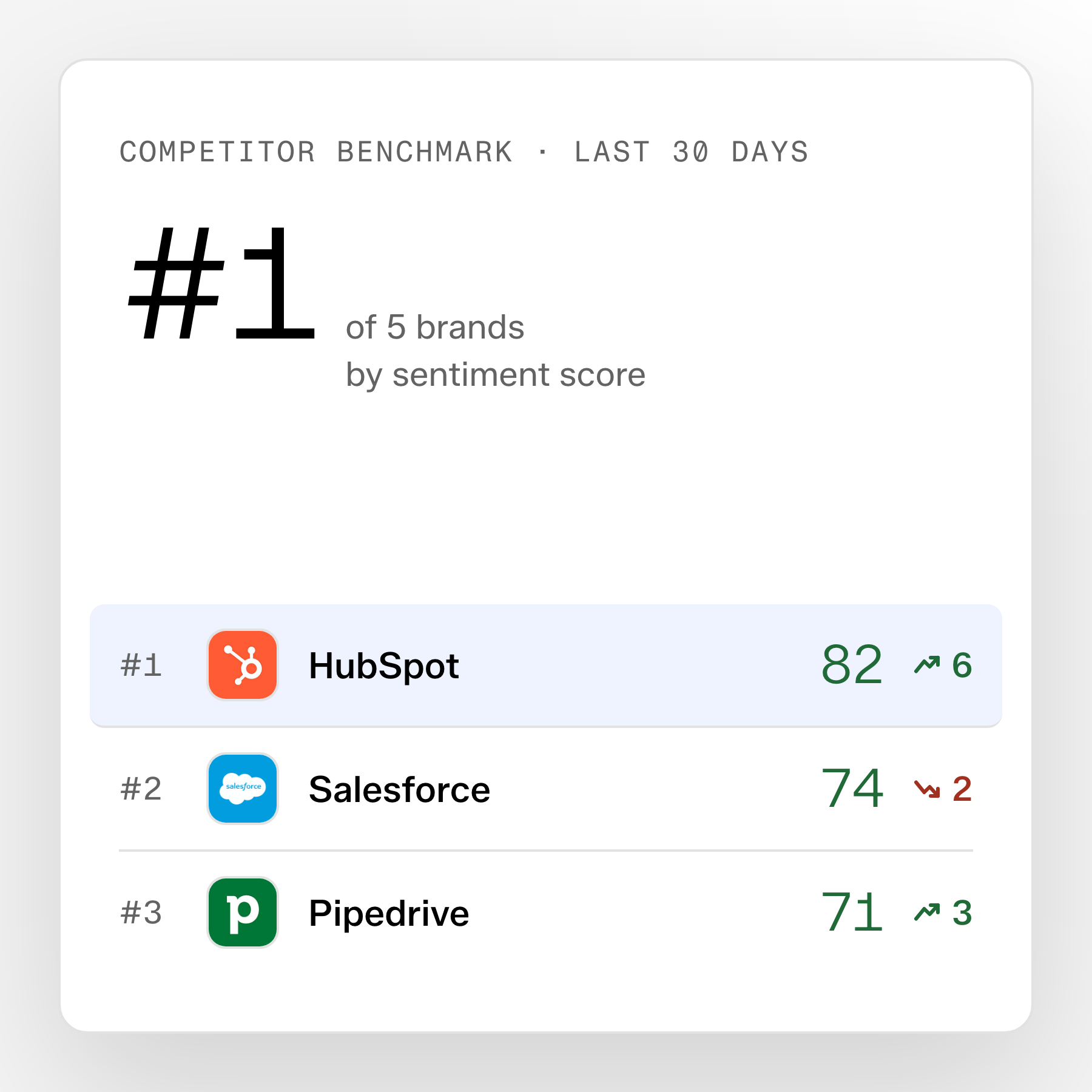
Surfacd already helps teams understand their position across LLMs, with data such as where a brand appears, how it ranks against competitors, visibility over time, which prompts it wins and loses on, and which sources influence those answers.
Reputation Intelligence adds positioning to that picture, analysing how brands are characterised in AI responses, helping teams understand whether the story surfaced reflects the reputation and positioning they are trying to build.
That might mean identifying a strong association with innovation or expertise, spotting an outdated perception that continues to follow the brand, or seeing that different models tell materially different stories about the same business.
Rather than relying on individual responses or anecdotal checks, those signals can now be measured and tracked over time, and, crucially, actions can be taken based on the insights.
Track sentiment across models
Reputation Intelligence measures positive, neutral and negative sentiment across AI responses, with an overall sentiment score and the ability to compare performance across individual models.
This makes it easier to see both the direction of travel and variation.
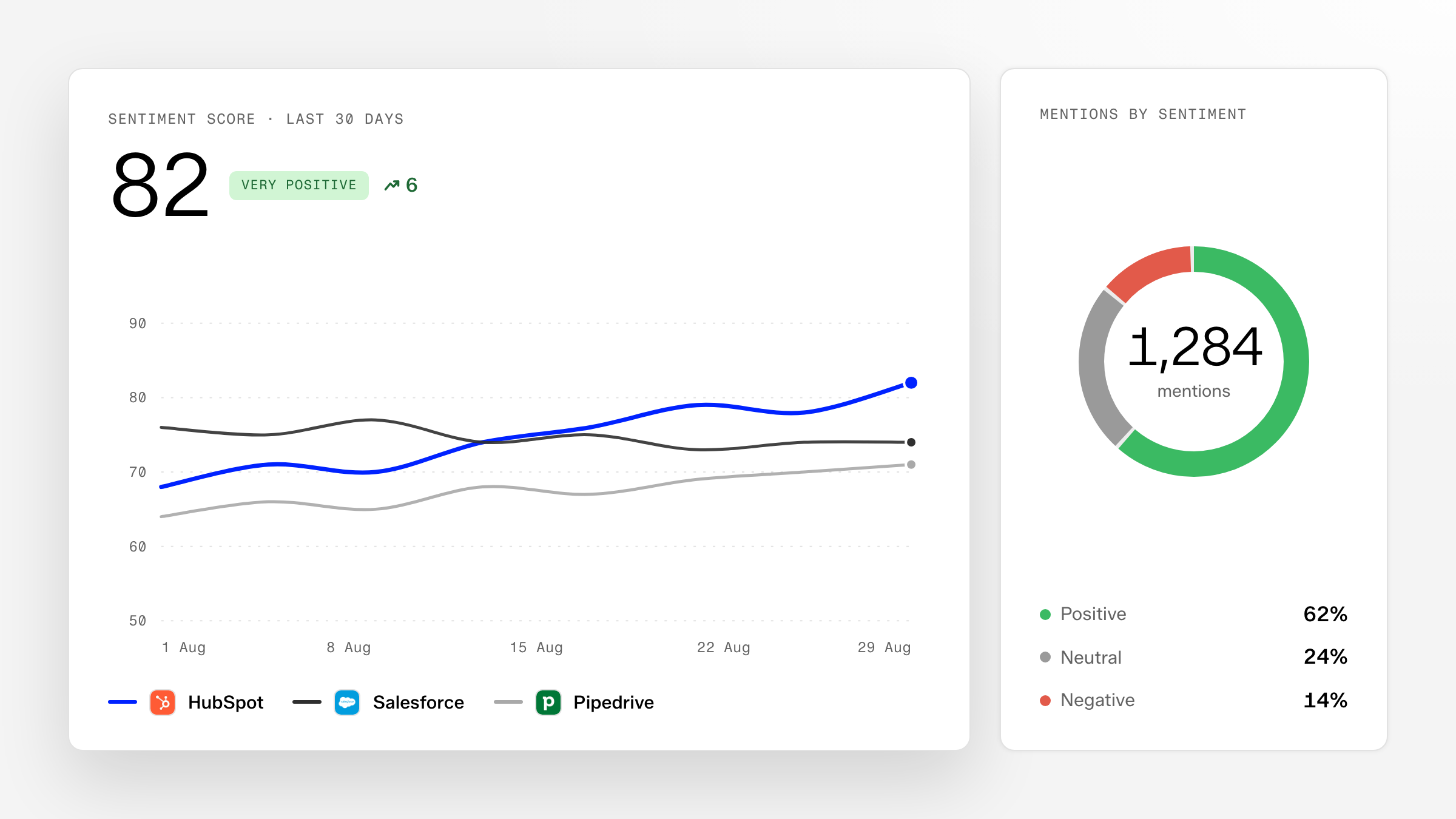
A brand might be characterised positively overall but perform much less strongly on one particular platform. Sentiment may improve following a positioning or communications programme, while another theme begins moving in the opposite direction.
Beyond just being another score to monitor, Reputation Intelligence gives users the context they need to understand what is driving brand perception across AI and make informed decisions about what to do next.
Understand your themes and narratives
Sentiment tells you broadly how your brand is being discussed. Themes and narratives reveal what sits underneath it.
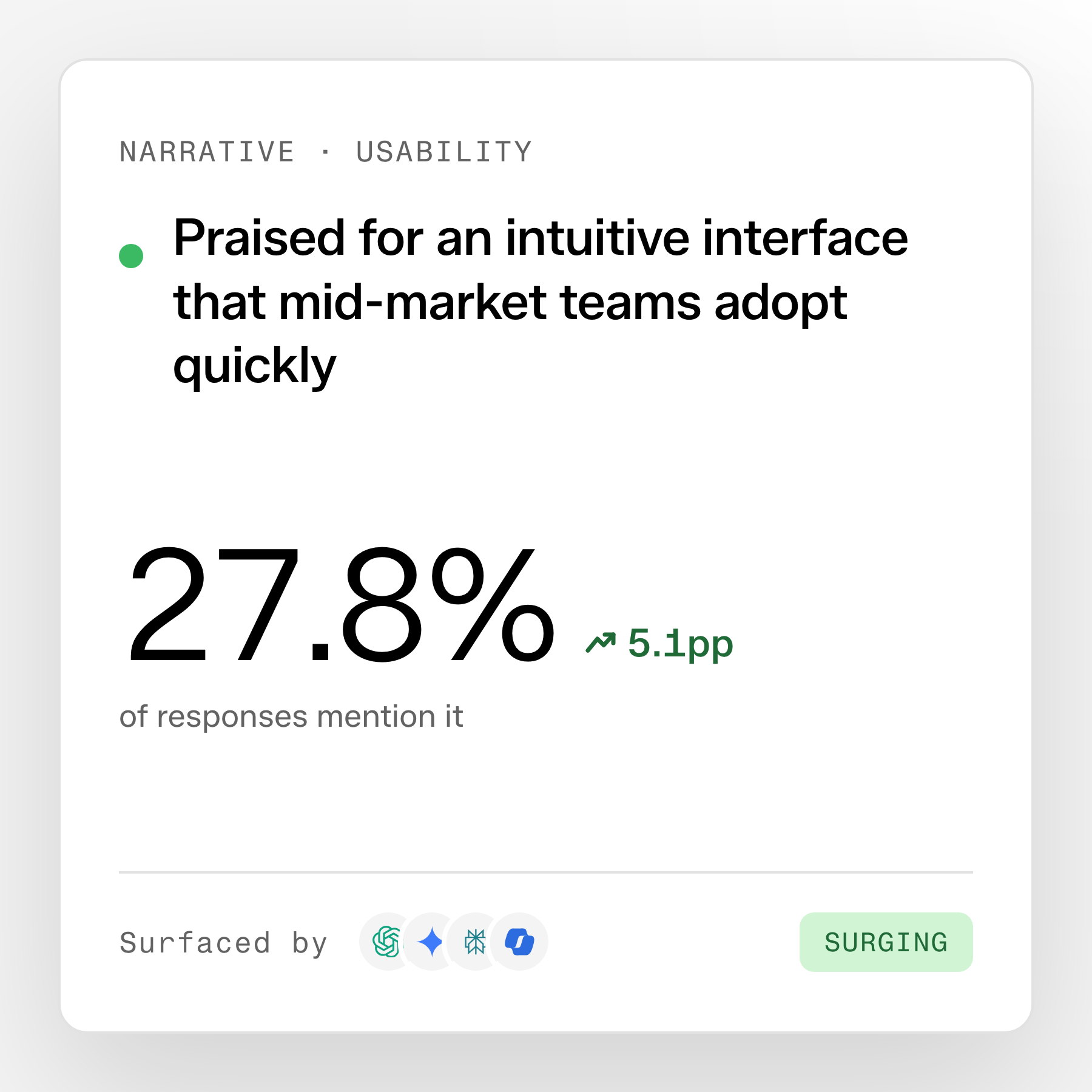
Surfacd identifies the recurring topics associated with a brand, then pulls out a broader narrative merging across responses. That gives teams a much clearer way to assess whether intended positioning is translating into the answers buyers are seeing.
If you want to be known for enterprise expertise but LLMs overwhelmingly associate you with smaller businesses, there is a positioning gap.
If an older product weakness continues to dominate discussion despite significant changes to the offer, there is a reputation issue worth addressing.
And if a new positive or negative narrative starts to gain momentum, you can see it develop rather than discover it months later.
Surface what AI thinks it knows about you
Reputation Intelligence also analyses the factual claims being made about your brand.
Claims can be reviewed and marked as verified true, verified false, or unverified, creating a shared record of what LLMs say and where accuracy issues exist.
That could be an outdated price, a discontinued service, an incorrect geographical footprint or a product limitation that was resolved years ago. These details matter because they can appear directly in the answers someone uses to research, compare, or assess a business.
Follow the evidence
Every theme, narrative and fact can be traced back to the responses, prompts, models and cited sources behind it. If an outdated claim keeps appearing, you can investigate which sources may be feeding it. If a particular narrative is becoming more prominent, you can see the evidence supporting that trend.
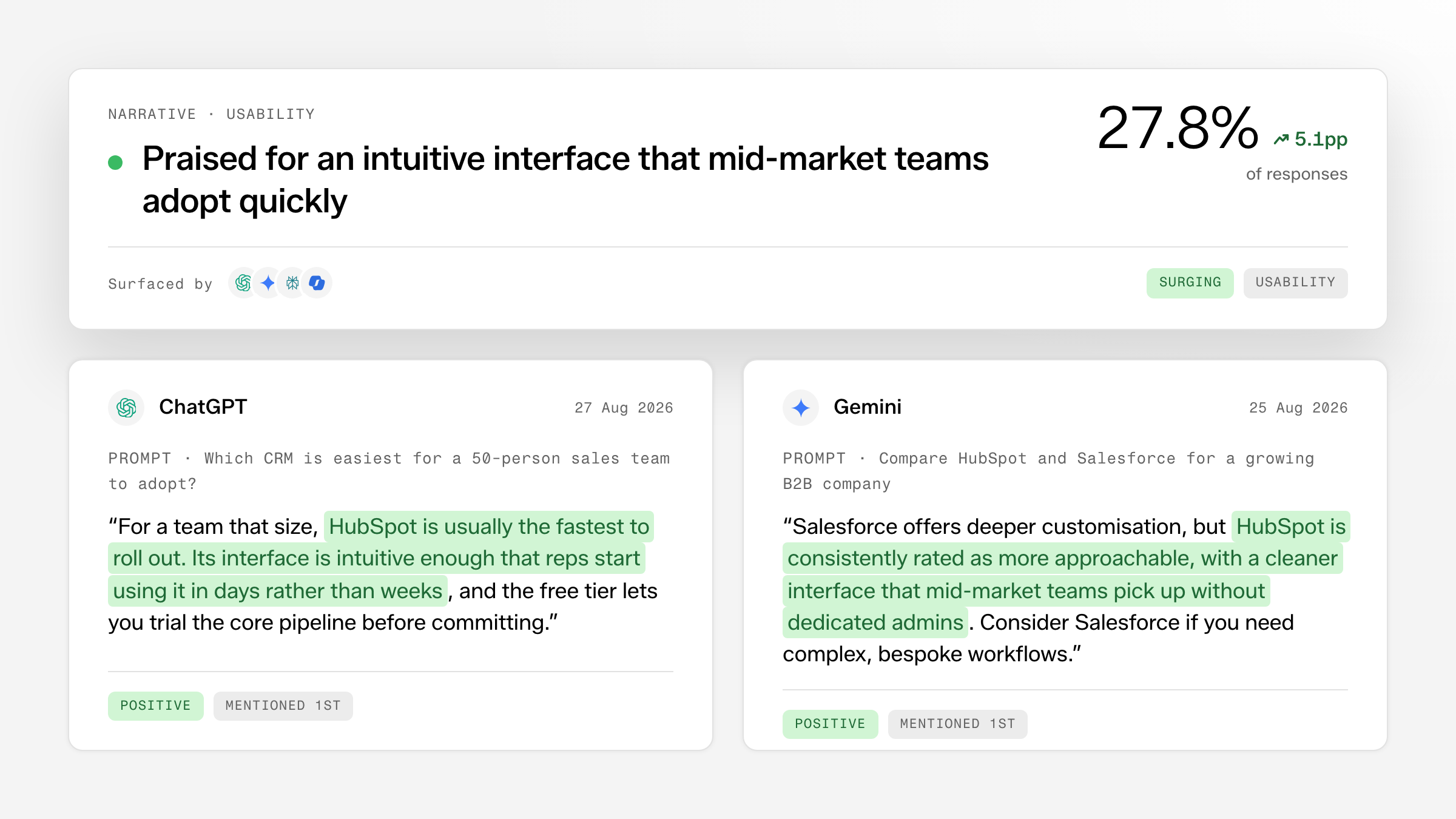
If reputation varies across markets, topics, or AI platforms, filters let you isolate those differences and examine what drives them.
That connection between the reputation signal and its underlying evidence is what turns monitoring into something teams can act on across PR, content, SEO, GEO and brand strategy.
A fuller picture of your position in AI search
Reputation Intelligence is part of an expanding suite of Surfacd capabilities designed to give teams a more complete view of their AI search performance.
AI Visibility Tracking shows where and how often your brand appears.
Prompt & Topic Tracking shows where visibility is being won or lost across the questions that matter.
Reputation Intelligence shows how your brand is being characterised and whether the information behind that characterisation is accurate.
Finally, with our API and MCP capabilities, that intelligence can increasingly reside within the reporting, systems and AI tools that teams already use.
Together, the goal is to move beyond a simple visibility score and give Surfacd users a robust understanding of both their position and positioning across LLMs, why it looks the way it does, and where there are opportunities to change it.
Reputation Intelligence is the latest step in that journey, and there’s plenty more to come.
Reputation Intelligence is now available in Surfacd.
Explore Reputation Intelligence with a no-obligation demo, or if you’re ready to get going, start a free 7-day trial.
Ready to get Surfacd.